Introduction
As organizations increasingly adopt cloud computing, they require a robust framework to guide their cloud journey effectively. Microsoft Azure offers the Cloud Adoption Framework (CAF), a proven methodology to accelerate cloud adoption and provide organizations with a structured approach. Building upon the CAF, Microsoft has introduced the Azure CAF Super Module, enhancing the framework’s capabilities. In this blog post, we will delve into the CAF Super Module, with a particular focus on the CAF Enterprise Module, and discuss the advantages and disadvantages of leveraging this powerful tool.

Understanding the Azure CAF Super Module
“We want to promote “infrastructure-as-data” in favor of ad-hoc “infrastructure-as-code”, in order to make composition more accessible and rely on a strong community to write code.”
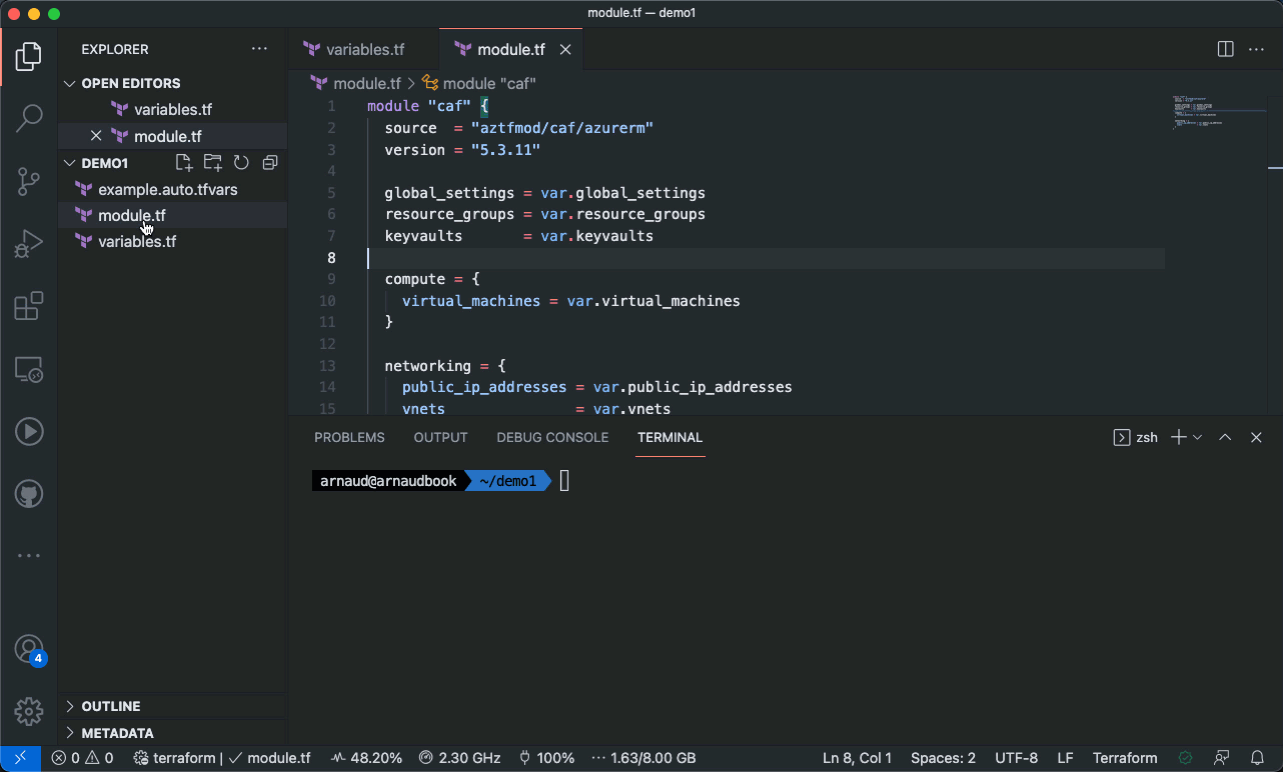
The Azure CAF Super Module is an extension of the Cloud Adoption Framework, tailored specifically for Azure. It serves as a comprehensive guide to help organizations develop their cloud strategy, plan migrations, establish governance controls, and optimize their cloud environments. By adopting the Super Module, organizations can align their cloud initiatives with Azure best practices, ensuring a secure, scalable, and efficient cloud adoption journey.
The CAF Enterprise Module
At the core of the Azure CAF Super Module lies the CAF Enterprise Module, a key component designed to provide organizations with a standardized approach to building and operating their cloud environments. The CAF Enterprise Module encompasses several crucial elements, including governance, operations, and security, enabling organizations to effectively manage and maintain their Azure deployments.
- Governance: The CAF Enterprise Module offers a set of governance principles, guidelines, and best practices that facilitate the implementation of effective governance controls. It helps organizations define roles and responsibilities, establish policies, and ensure compliance and security in their Azure environments. The module assists in creating a well-structured governance framework, enabling organizations to balance control and agility.
- Operations: With the CAF Enterprise Module, organizations can implement standardized operational practices for managing their Azure environments. It provides guidance on monitoring, management, and incident response, helping organizations ensure the reliability, availability, and performance of their cloud resources. The module also assists in automating operational tasks, optimizing costs, and maintaining service continuity.
- Security: Security is a critical aspect of any cloud deployment, and the CAF Enterprise Module emphasizes this by offering comprehensive security guidance. It provides organizations with a structured approach to defining security policies, implementing security controls, and managing identity and access. The module also focuses on threat protection, data protection, and compliance, enabling organizations to build secure and compliant Azure environments.
Advantages of the CAF Super Module
- Standardization: The Azure CAF Super Module promotes standardization by providing a well-defined framework for cloud adoption. It ensures that organizations follow best practices and establish consistent processes and policies, resulting in improved efficiency and reduced complexity.
- Accelerated adoption: The CAF Super Module accelerates cloud adoption by offering a clear roadmap and guidance. It helps organizations avoid common pitfalls and make informed decisions throughout their cloud journey, ultimately saving time and effort.
- Enhanced governance: The CAF Enterprise Module enhances governance capabilities by providing a structured approach to establish and enforce governance controls. It ensures compliance, mitigates risks, and promotes accountability, giving organizations greater control over their Azure environments.
- Improved security and compliance: With the CAF Super Module, organizations can strengthen their security posture and achieve compliance objectives. The module offers comprehensive security guidance, enabling organizations to implement robust security controls and protect their data and resources effectively.
Disadvantages of the CAF Super Module
- Complexity: While the CAF Super Module offers a comprehensive framework, its implementation can be complex for organizations with limited cloud expertise. Organizations may need to invest in training and additional resources to fully leverage the capabilities of the Super Module.
- Customization challenges: The CAF Super Module provides a standardized
- approach, which may not align perfectly with every organization’s unique requirements. Adapting the Super Module to specific needs may involve additional customization efforts and careful consideration of individual business objectives.
- Remediation of legacy assets is not really accounted for and probably requires a seprate git repo for retro fixing due to legacy resources not having a naming convention to begin with
Conclusion
The Azure CAF Super Module, with its powerful CAF Enterprise Module, provides organizations with a robust framework for accelerating their cloud adoption journey on the Azure platform. By leveraging the CAF Super Module, organizations can benefit from standardized practices, enhanced governance, improved security, and accelerated cloud adoption. However, it is essential to acknowledge the potential complexities and customization challenges that organizations may encounter while implementing the Super Module. Overall, the Azure CAF Super Module offers a valuable toolset for organizations seeking to maximize the benefits of Azure and achieve successful cloud transformations.
Sources:
https://aztfmod.github.io/documentation/docs/module/module-intro/
 Romiko Derbynew
You must be logged in to post a comment.